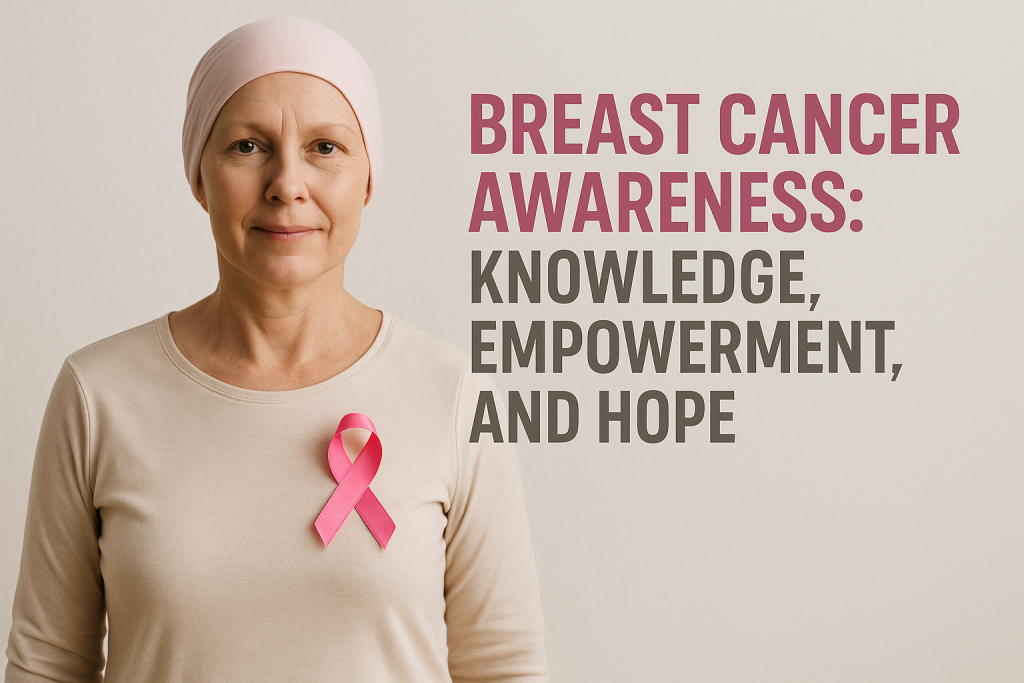
October is Breast Cancer Awareness Month, a time dedicated to increasing understanding of one of the most common cancers worldwide. Awareness is not just about wearing pink; it is about education, early detection, and supporting those affected by the disease. With advancements in screening and treatment, more people than ever are surviving breast cancer
— but awareness remains a crucial part of saving lives.
What Is Breast Cancer?
Breast cancer develops when cells in the breast begin to grow uncontrollably, forming a mass or lump that may invade nearby tissues. It most often starts in the ducts (the tubes that carry milk to the nipple) or in the lobules (the glands that produce milk).
While it is far more common in women, men can also develop breast cancer since both sexes have breast tissue.
Common types include:
- Invasive Ductal Carcinoma (IDC): The most common type, starting in the milk ducts and spreading to surrounding tissue.
- Invasive Lobular Carcinoma (ILC): Begins in the milk-producing glands and can spread to other areas of the breast or body.
The Importance of Early Detection
When breast cancer is diagnosed at an early stage, treatment outcomes are significantly better. The five-year survival rate for localized breast cancer (cancer that has not spread beyond the breast) can be as high as 99%.
Key steps for early detection:
- Self-examinations: Perform monthly breast self-exams to become familiar with how your breasts normally look and feel.
- Mammograms: Recommended yearly or every two years for women over 40, or earlier for those with a family history of breast cancer.
- Clinical breast exams: Conducted by healthcare professionals during routine checkups.
Early detection not only increases survival rates but also allows for less invasive treatment options.
Interesting Facts About Breast Cancer
- Men can get breast cancer too. About 1% of all breast cancer cases occur in men.
- Lifestyle factors matter. Regular physical activity, maintaining a healthy weight, and limiting alcohol consumption can help reduce risk.
- Genetics play a role. Between 5% and 10% of breast cancers are caused by inherited mutations in genes such as BRCA1 and BRCA2. At Qvita Health and Wellness we offer genetic testing via Myriad Labs. An easy saliva test.
- There are many subtypes. Breast cancer is not one single disease — it includes over ten molecular subtypes that differ in behavior and treatment response.
- Survival rates are improving. Due to early detection and better therapies, breast cancer death rates have dropped by more than 40% since 1989.
Common Myths and Facts
| Myth | Fact |
| Wearing a bra causes breast cancer | There is no scientific evidence linking bras to breast cancer. |
| Only older women are at risk | Younger women and even men can develop breast cancer. |
| No family history means no risk | Most breast cancers occur in people with no family history. |
| Every lump is cancer | Many lumps are benign, but they should always be checked by a doctor. |
Breast cancer research continues to lead to remarkable advancements in diagnosis and treatment. New therapies, including targeted drugs and immunotherapy, are improving survival and quality of life for patients worldwide.
Support also plays an essential role. Community awareness events, fundraising walks, and open conversations help reduce stigma and encourage people to prioritize screenings.
Every act of awareness — from reminding a friend to schedule a mammogram to supporting a survivor — contributes to the global effort against breast cancer.
Conclusion
Breast cancer awareness is about education, vigilance, and compassion. Early detection remains the most effective tool in reducing mortality, and continued research offers hope for even better outcomes in the future.
If you notice any changes in your breast — such as a new lump, thickening, nipple discharge, or skin changes — consult a healthcare professional as soon as possible.
Awareness leads to action, and action saves lives. Stay current with your physical exams and ask us if your due for screening at your next appointment.
Qvita Health and Wellness 813-501-4130.