Hypertension Care in Wesley Chapel, FL
High blood pressure, also called hypertension, means the force of your blood against your artery walls stays higher than it should. Most people feel nothing, so it is usually found at a routine visit rather than noticed at home. At Qvita Health and Wellness in Wesley Chapel, we check your pressure, confirm it with repeat readings, draw the labs in our office, and treat it as part of your primary care.
Medically reviewed by Panagiota (Peggy) Demetriou, APRN, FNP-BC, November 3, 2026.
High Blood Pressure at a Glance
- Normal reading: less than 120 systolic and less than 80 diastolic, written as 120/80 mm Hg.
- Elevated: 120 to 129 systolic with a diastolic under 80.
- Stage 1 high blood pressure: 130 to 139 systolic, or 80 to 89 diastolic.
- Stage 2 high blood pressure: 140 or higher systolic, or 90 or higher diastolic.
- Severe: higher than 180 systolic or higher than 120 diastolic. With symptoms, that is a 911 call.
- Usual symptoms: none, until it has already caused damage.
- How common it is: nearly half of US adults have it, and about one in four of them has it under control.
- Treatment goal for most adults: below 130/80 mm Hg.
- How we test for it: readings in the office and at home, then blood work and a urine sample drawn at your visit.
What High Blood Pressure Is
Blood pressure is the force of blood pushing against the walls of your arteries. A reading has two numbers. The top number, systolic, is the pressure when your heart pumps. The bottom number, diastolic, is the pressure between beats, while the heart refills. Both are measured in millimeters of mercury, written mm Hg.
High blood pressure develops when blood moves through the arteries at higher than normal pressure and stays there. One high reading at a pharmacy kiosk does not make a diagnosis. A pattern of readings does, which is why we take more than one and ask for readings from home. The stages listed above come from the 2025 high blood pressure guideline of the American Heart Association and the American College of Cardiology, the current US standard. If you want the numbers explained reading by reading, see what your blood pressure numbers mean.
What Causes High Blood Pressure
For most people, high blood pressure has no single cause. This is primary, or essential, hypertension, and it develops gradually with age. A smaller group has secondary hypertension, which is caused by another condition or by a medicine. Kidney disease, sleep apnea, thyroid problems, and some prescription and over the counter medicines can all push blood pressure up, and treating the cause can bring it down.
Several things raise your risk whether or not another condition is involved:
- Age. Blood pressure tends to rise as you get older.
- Family history. High blood pressure often runs in families.
- Diet. Eating foods that are high in salt and low in potassium.
- Weight and activity. Carrying extra weight and getting little physical activity.
- Alcohol. Regular drinking raises blood pressure.
- Sex and background. Men are more likely than women to develop it through middle age, and it is more common in Black adults.
One common question, can dehydration raise blood pressure, gets its own answer. Finding a cause matters because the first set of labs is designed to look for one.
Why It Matters When Nothing Hurts
High blood pressure damages blood vessels quietly. Over years it raises the risk of heart attack, stroke, heart failure, and chronic kidney disease, and it is linked to vascular dementia through damage to the small vessels of the brain. Nearly half of US adults have high blood pressure, and only about one in four of them has it under control. Control depends on follow up: repeat readings, adjusted doses, and lifestyle changes that hold. That is easier with a provider you already see for the rest of your care.
Treatment works. Bringing blood pressure down lowers the risk of each of those outcomes, and the current guideline recommends starting early in part to protect memory and thinking later in life. For a plain account of the long term risks, see what untreated high blood pressure does over time.
How We Diagnose High Blood Pressure in Wesley Chapel
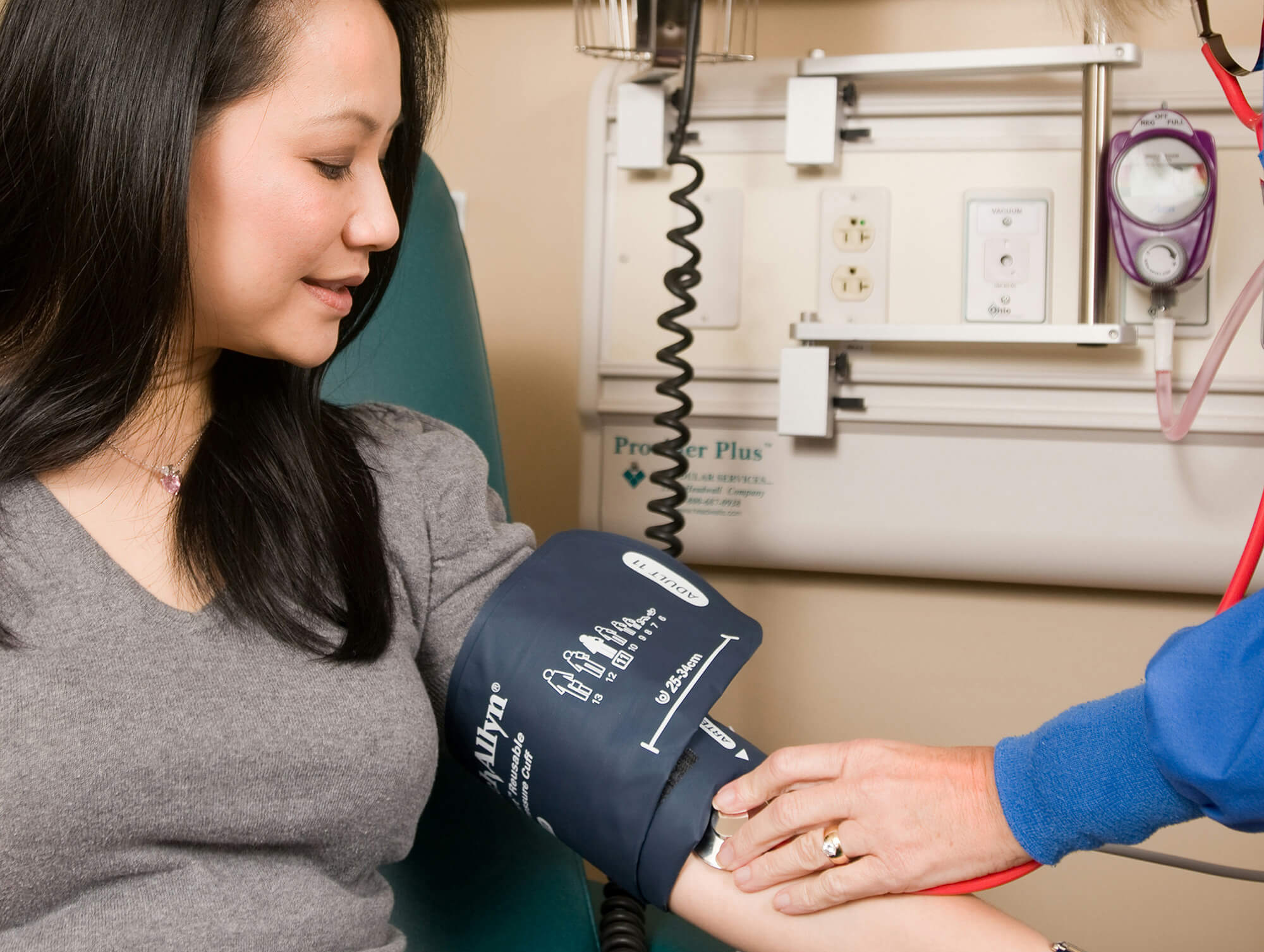
Screening starts with a cuff reading at the office, and a physical with us includes one. The U.S. Preventive Services Task Force recommends a check every year for adults 40 and older and for anyone at increased risk, and every three to five years for adults 18 to 39 at lower risk.
A diagnosis takes two or more readings at separate appointments, and the guideline asks that office readings be confirmed with readings taken outside the office before treatment starts. Home readings catch two patterns the office alone can miss: white coat hypertension, where the pressure runs high only at the office, and masked hypertension, where it looks normal at the office and runs high at home or overnight.
Once high blood pressure is confirmed, we look for causes and for early damage. Blood work is drawn in our office through our in-office lab services and sent to the lab with your insurance information. For high blood pressure that usually means kidney function and electrolytes, blood sugar, cholesterol, and thyroid function, plus a urine test for albumin, which the current guideline now recommends for everyone with high blood pressure. Your provider decides whether anything else, such as a heart tracing (ECG), is needed.
How We Treat High Blood Pressure
Treatment starts with your numbers, your other conditions, and your overall risk of heart disease. The goal for most adults is a blood pressure below 130/80 mm Hg.
Lifestyle changes come first for everyone. For stage 1 high blood pressure in someone at lower heart risk, they may be the whole plan for the first three to six months. The changes with the most evidence behind them:
- Keep sodium under 2,300 mg a day and work toward 1,500 mg.
- Follow a heart healthy eating pattern such as DASH: vegetables, fruits, whole grains, and more potassium.
- Get 75 to 150 minutes of physical activity a week, aerobic, resistance, or both.
- If you are carrying extra weight, lose at least 5 percent of your body weight.
- Cut back on alcohol, ideally to none.
- Manage stress, and get checked for sleep apnea if you snore or wake unrefreshed.
Medication is added when lifestyle changes are not enough, when the pressure is 140/90 or higher, or when other conditions such as diabetes, kidney disease, or a history of stroke raise the stakes. Stage 2 high blood pressure usually means starting two medicines together, often combined in one pill. Many people need more than one, and doses change over time, so follow up visits and home readings are part of the plan. The decision comes down to one question, when lifestyle changes are not enough, and we walk through it with you.
Because primary care and weight and wellness care sit under one roof here, the pieces that affect blood pressure are handled by the same team: type 2 diabetes, cholesterol, weight, hormones, and sleep. If weight is part of the picture, our medical weight loss program can be part of the plan. Targets, follow up, and home monitoring are how we manage high blood pressure over the long run.
Checking Your Blood Pressure at Home
The American Heart Association recommends home monitoring for everyone with high blood pressure. Home readings help confirm a diagnosis and show whether treatment is working. To make them count:
- Use an automatic cuff that goes on the upper arm, and choose one that has been validated. Wrist and finger monitors are not recommended, and smartwatches and other cuffless devices should not be relied on for readings.
- Do not smoke, drink caffeine, or exercise in the 30 minutes before, and empty your bladder first.
- Sit quietly for at least five minutes, with your arm resting on a flat surface at heart level.
- Take two readings one minute apart, at the same time each day.
- Write every reading down, or let the monitor store them, and bring them to your visit.
When to See Someone, and When to Call 911
Make an appointment if a home or pharmacy reading is 130/80 or higher more than once, if you were told your pressure was high in the past and have not followed up, or if high blood pressure runs in your family and you have not been checked in the last year.
A reading higher than 180/120 needs attention the same day. Wait one minute and take it again. If it is still that high and you have no symptoms, call us at (813) 501-4130; we offer same-day appointments whenever possible. If the reading comes with chest pain, shortness of breath, back pain, numbness, weakness, a change in vision, or trouble speaking, call 911. Do not wait to see whether it comes down on its own.
What to Expect at Your First Visit
If you are new to the practice, bring a photo ID and your insurance card, any recent records or lab results, a full list of your medications and supplements with doses, and a list of allergies. If you already have a home monitor, bring your readings. Our New Patients page has the full list. We accept many major insurance plans, including several Medicare Advantage plans, and welcome self-pay patients; discounted self-pay pricing is available for lab work.
High Blood Pressure FAQs
What is a normal blood pressure reading?
Less than 120 systolic and less than 80 diastolic. Readings of 120 to 129 over less than 80 are elevated, and high blood pressure begins at 130/80.
Does high blood pressure cause headaches or other symptoms?
Usually not. High blood pressure rarely causes symptoms until it has already caused damage, which is why it is checked rather than felt. A reading higher than 180/120 with a severe headache, chest pain, shortness of breath, numbness, weakness, vision changes, or trouble speaking is an emergency; call 911.
Do I have to take medicine for high blood pressure?
Not always. Lifestyle changes come first, and for stage 1 readings in someone at lower heart risk they may be the whole plan for three to six months. Medicine is recommended when readings are 140/90 or higher, when they stay at 130/80 or above after lifestyle changes, or when another condition raises your risk.
How often should I have my blood pressure checked?
Every year from age 40, or sooner if you are at increased risk, and every three to five years between 18 and 39 if you are at lower risk. If you already have high blood pressure, your provider sets the schedule, and home readings fill in between visits.
Can losing weight lower my blood pressure?
Yes. The current guideline recommends losing at least 5 percent of body weight for adults who are carrying extra weight, and lower blood pressure is one of the changes that follows. Our medical weight loss program is part of the same practice, so weight and blood pressure can be managed together.
Do you draw the labs for high blood pressure in the office?
Yes. Blood is drawn in our Wesley Chapel office and sent to the appropriate lab with your insurance information. Discounted self-pay pricing is available for patients without insurance.
Can I be seen the same day for a high reading?
We offer same-day appointments whenever possible. Call (813) 501-4130 and tell us the reading. If it is higher than 180/120 and you have any of the emergency symptoms listed above, call 911 instead.
Who manages high blood pressure at Qvita Health and Wellness?
Your primary care provider, the same provider who sees you for your physical, your labs, and the rest of your care. High blood pressure is managed as part of primary care here, and we coordinate a referral to a specialist if your case calls for one.
Book a Blood Pressure Check in Wesley Chapel
Call Qvita Health and Wellness at (813) 501-4130 or request an appointment online.
Keep Reading
- Conditions we treat
- Type 2 diabetes
- Primary care services in Wesley Chapel
- In-office lab services
- Medical weight loss
Sources
- National Heart, Lung, and Blood Institute. What Is High Blood Pressure? Updated April 25, 2024. nhlbi.nih.gov/health/high-blood-pressure
- National Heart, Lung, and Blood Institute. High Blood Pressure: Causes and Risk Factors. Updated April 30, 2024. nhlbi.nih.gov/health/high-blood-pressure/causes
- National Heart, Lung, and Blood Institute. High Blood Pressure: Diagnosis. Updated June 26, 2025. nhlbi.nih.gov/health/high-blood-pressure/diagnosis
- MedlinePlus, National Library of Medicine. High Blood Pressure. Updated January 22, 2026. medlineplus.gov/highbloodpressure.html
- American Heart Association. Top 10 Things to Know About the AHA/ACC High Blood Pressure Guideline. Reviewed August 14, 2025. heart.org
- American Heart Association. 2025 High Blood Pressure Guideline: Top Things to Know. August 14, 2025. professional.heart.org
- American Heart Association. New high blood pressure guideline emphasizes prevention, early treatment to reduce CVD risk. August 14, 2025. newsroom.heart.org
- American Heart Association. When To Call 911 About High Blood Pressure. Reviewed August 14, 2025. heart.org
- American Heart Association. Home Blood Pressure Monitoring. Reviewed August 14, 2025. heart.org
- Centers for Disease Control and Prevention. High Blood Pressure Facts. Reviewed June 2, 2026. cdc.gov
- U.S. Preventive Services Task Force. Hypertension in Adults: Screening. Final recommendation, April 27, 2021. uspreventiveservicestaskforce.org